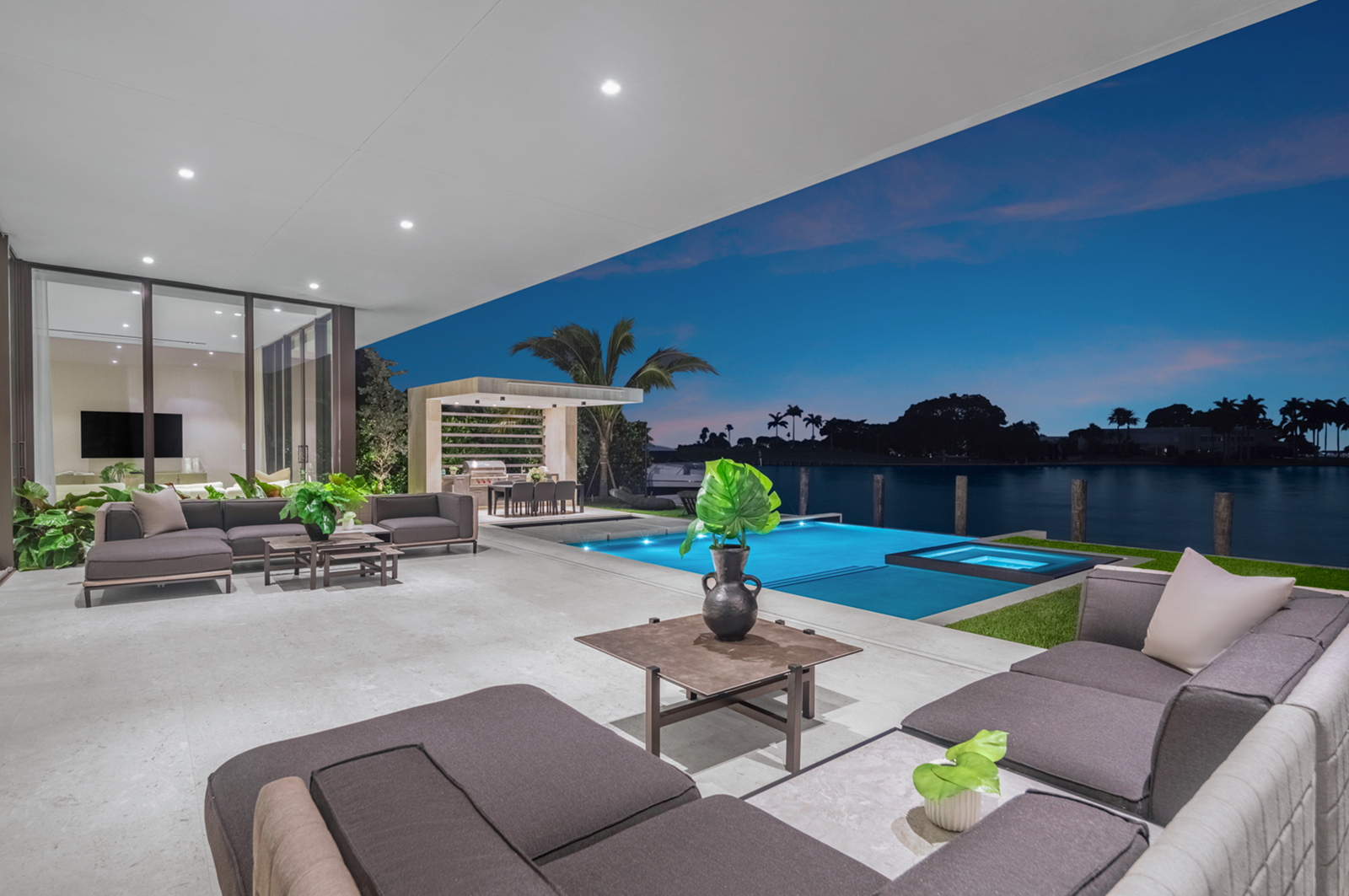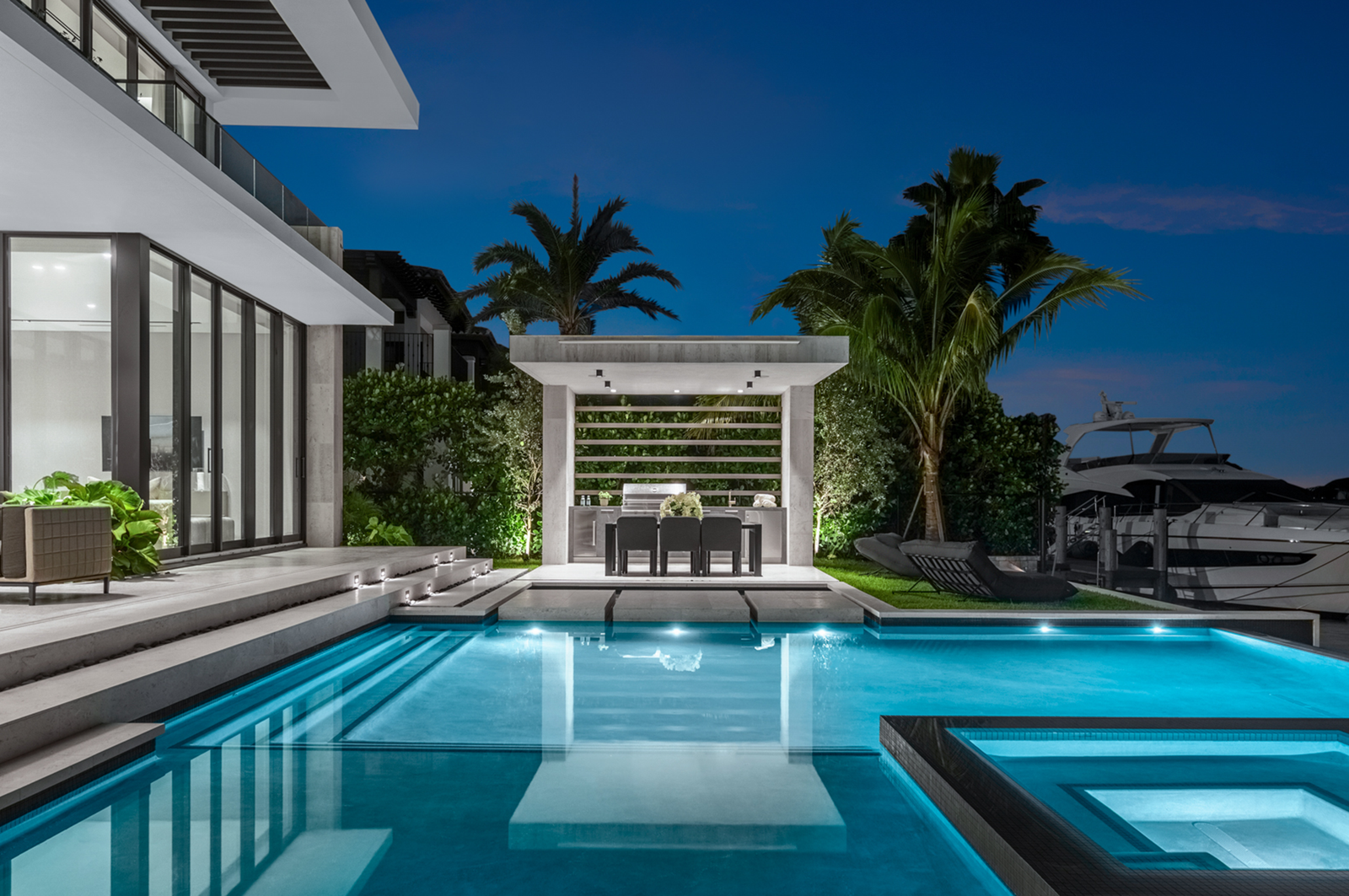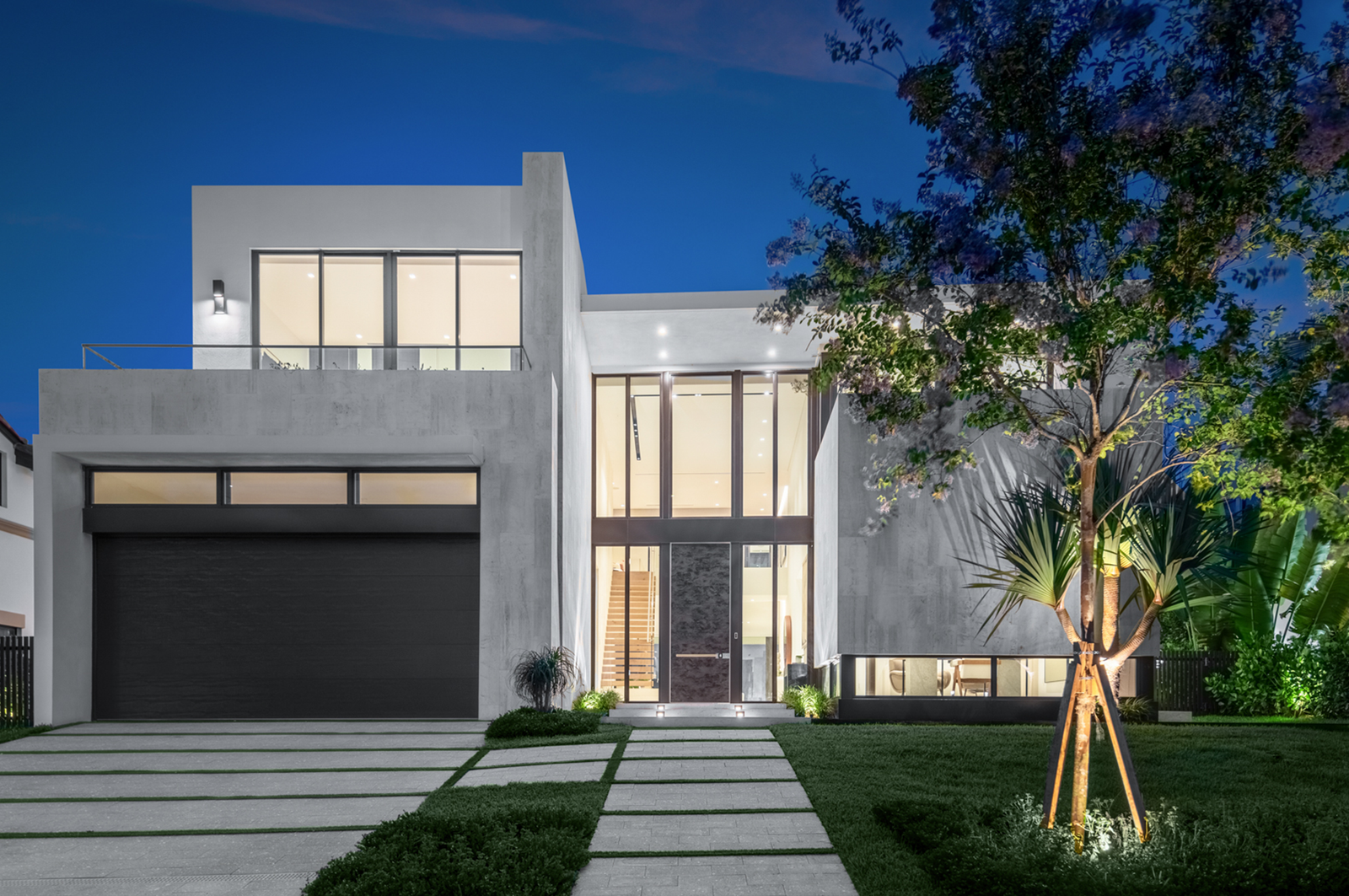
A private residence on the shores of Maimi, designed as a meditation on light, stone, and the quiet beauty of precision.
Set within a steeply sloping lakeside plot, Venice Beach was conceived as a series of horizontal planes that descend gradually toward the water. Each level frames a different relationship with the landscape — from the arrival court at street level to the pool terrace that seems to float above the lake.
The brief called for a home that could accommodate both private family life and the occasional grand gathering. In response, the architecture separates the social and private realms spatially while uniting them through a continuous material language of raw travertine, bleached oak, and hand-plastered wall surfaces.
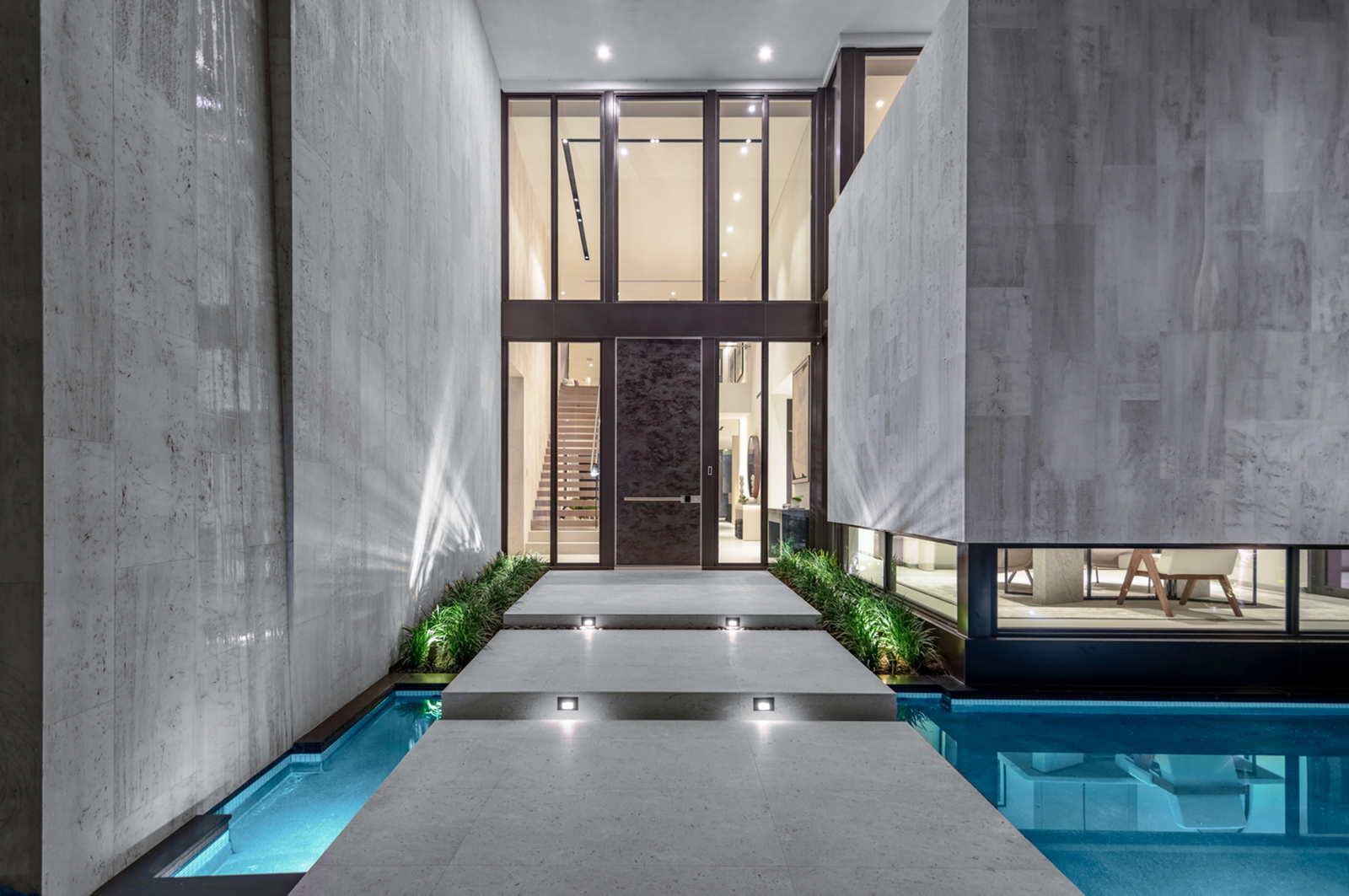
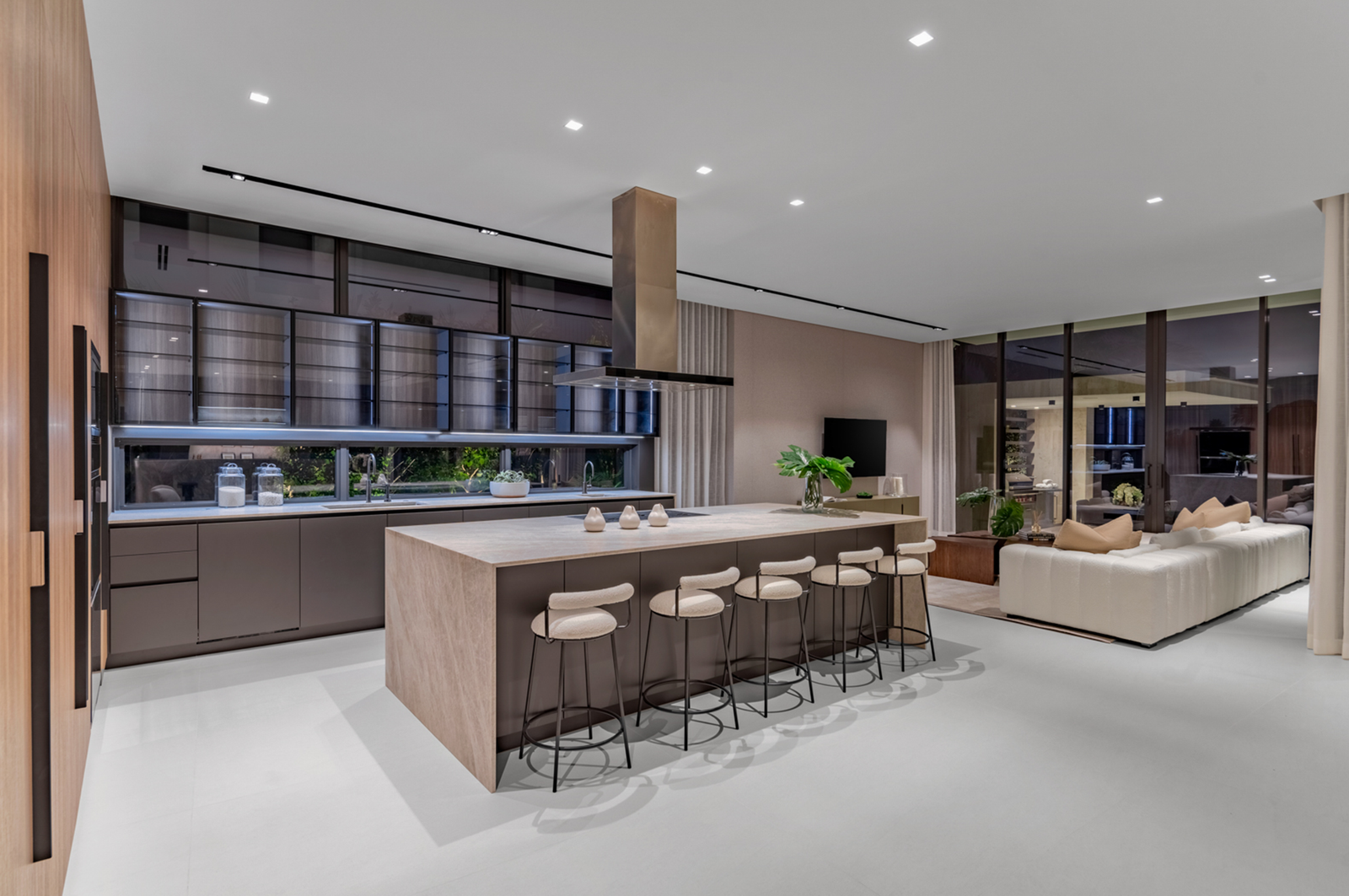
The architecture of Venice Beach pursues a studied restraint. There are no gestures for their own sake — every formal decision is tested against the question of whether it improves the experience of living in this specific place, at this latitude, above this body of water.
The result is a building that recedes into its landscape even as it commands it, that feels simultaneously anchored and weightless, intimate and expansive.
Three materials — travertine, bleached oak, and white plaster — are used throughout, inside and out, to create a seamless spatial continuum.
Each room is precisely positioned to frame a curated view: the Alps at dawn, the lake at midday, the Zurich skyline at dusk.
Deep overhangs and carefully angled apertures allow shafts of moving light to animate the plain surfaces across the full arc of each day.